When weighing quartzite vs marble countertops, choose quartzite for busy, hard-working kitchens and marble for lighter-use spaces. Quartzite is harder than marble and far less prone to etching from acidic foods. Marble is often the better fit for bathrooms, powder rooms, and owners who like a softly worn, lived-in surface. Both are natural stones, and no two slabs share the same veining. The decision comes down to how you use the room and how much upkeep you'll tolerate. This page compares the two on durability, maintenance, appearance, and installation. Use it alongside our countertops overview to narrow your options before visiting a slab yard.
The Short Answer
- Choose quartzite for kitchen work surfaces that see daily cooking, citrus, vinegar, and heavy use. It resists scratches and doesn't etch from common kitchen acids.
- Choose marble for bathrooms, backsplashes, baking stations, and other lighter-use surfaces, or anywhere you're happy to let the stone develop a patina.
The rest of this page explains why, and how to confirm that the slab you're considering actually behaves the way its label suggests.
What Actually Separates Quartzite From Marble
The names sound alike, but the two stones form from different minerals. That difference is the reason quartzite holds up in hard-working kitchens and marble suits lighter use.
- Quartzite is a metamorphic rock that forms when quartz-rich sandstone is put under heat and pressure. Quartz is a hard mineral, so true quartzite resists scratches from knives and everyday grit.
- Marble is a metamorphic rock formed from limestone or dolomite, which are mostly calcite. Calcite is much softer, and it reacts chemically with acids.
Don't confuse quartzite with quartz. Quartz countertops are engineered from crushed quartz and resin. They are a separate product with different heat and care characteristics.
Head-to-Head Comparison
Durability and Scratch Resistance
Quartzite is generally harder than glass and steel knife blades, so routine cutting slips rarely mark it. You should still use a cutting board, because hard stone dulls knives. Marble scratches more easily. Over time, a marble kitchen island will show fine wear in the areas you use most.
Etching and Staining
Etching and staining are two different problems:
- Etching is a chemical reaction that leaves dull spots. Lemon juice, vinegar, wine, tomato sauce, and some cleaners etch marble, and sealing does not prevent it. Genuine quartzite does not etch from common kitchen acids.
- Staining happens when liquids soak into the pores of the stone. Both stones are porous to varying degrees and benefit from sealing. Some quartzites are fairly dense, while others absorb liquids more readily.
Heat
Both stones tolerate heat better than engineered surfaces. Still, sudden temperature changes can stress any slab and can damage sealers. Use trivets under hot pans with either material.
Appearance
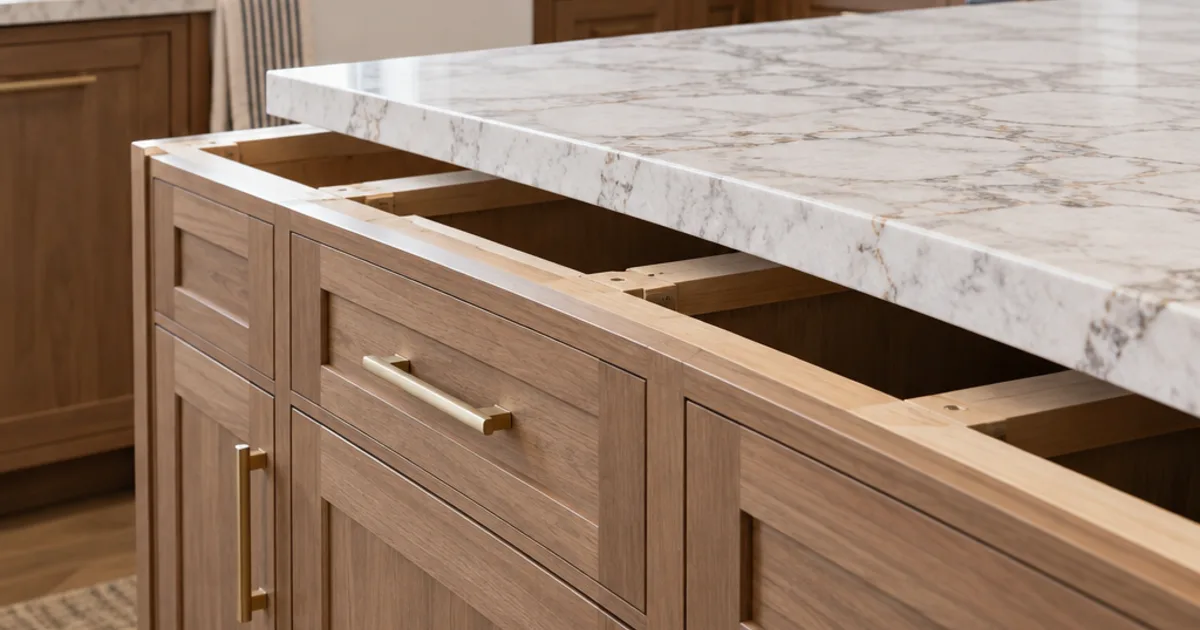
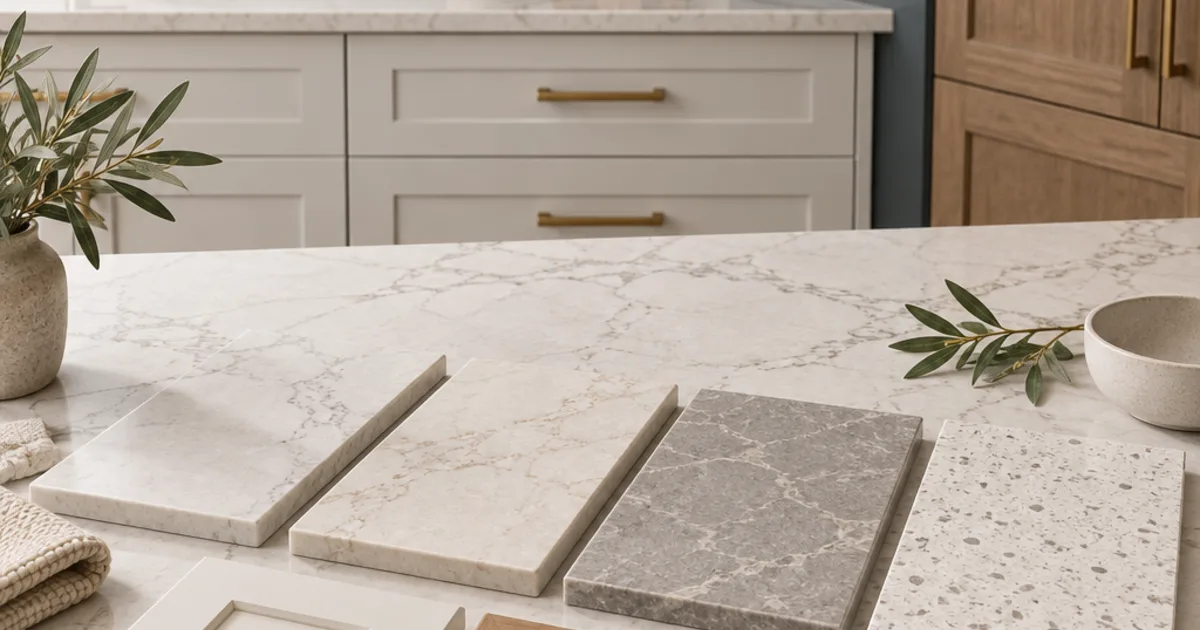
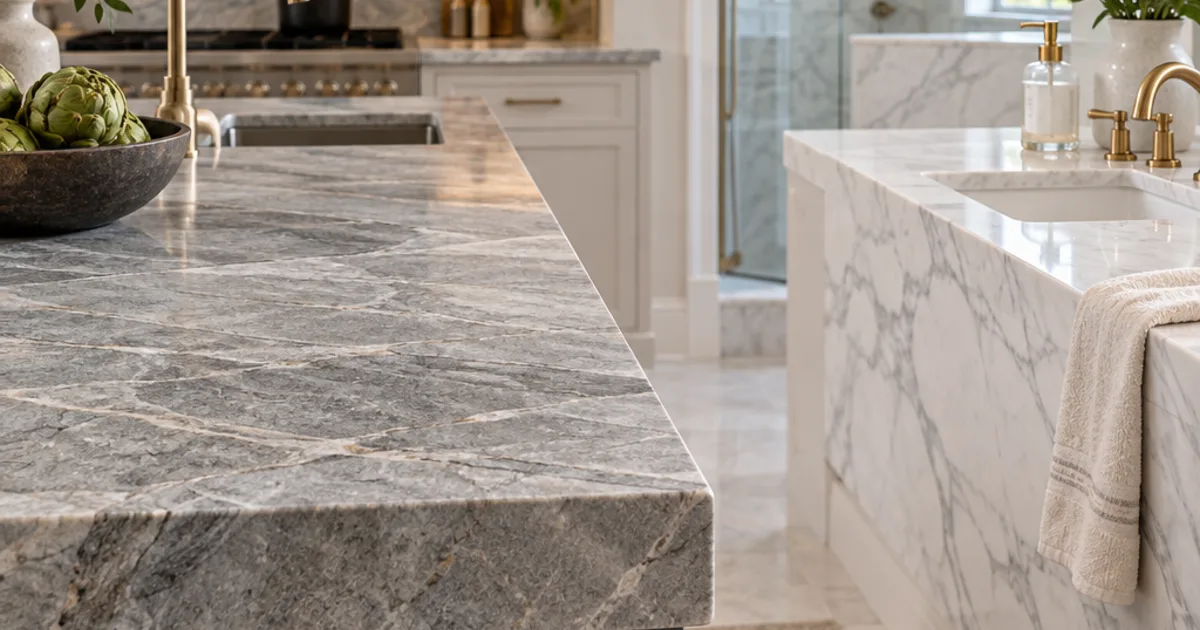
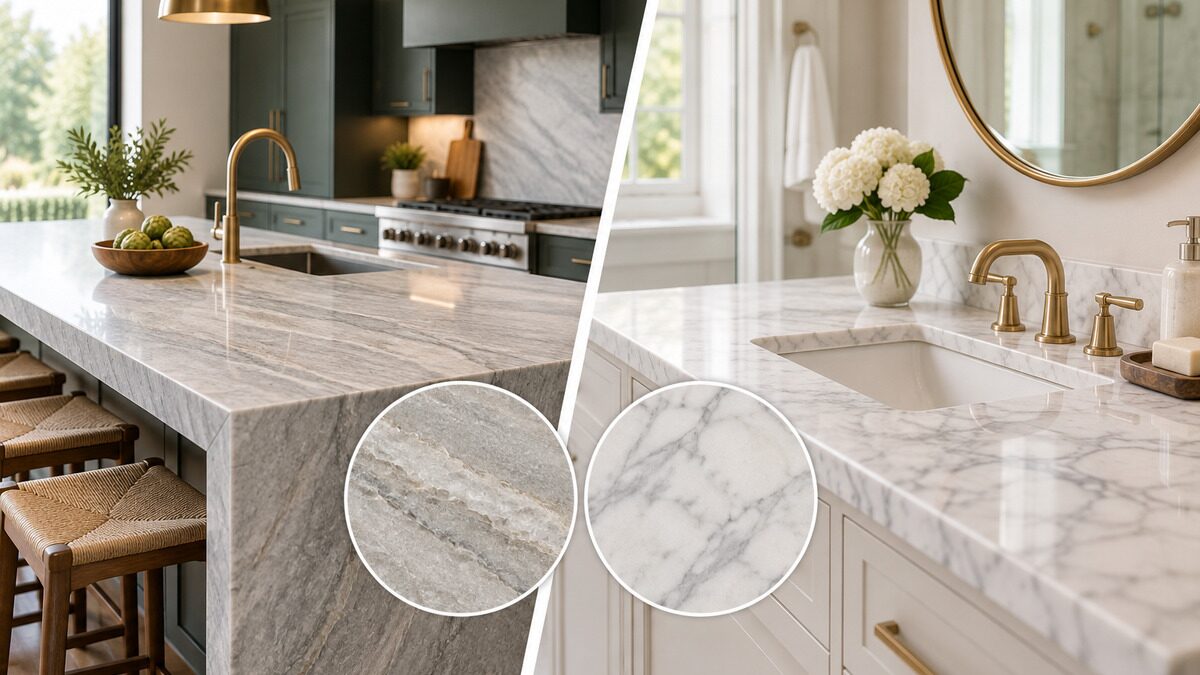
Marble has a soft, luminous depth and classic veining, as seen in Carrara- and Calacatta-style stones. Quartzite often looks very similar to marble, which is a big part of its appeal. It can also come in bolder colors and more dramatic movement. If you want the marble look in a hard-working kitchen, quartzite is the usual compromise.
Maintenance
| Factor | Quartzite | Marble |
|---|---|---|
| Etches from acids | Generally no | Yes |
| Scratch resistance | High | Moderate to low |
| Sealing | Recommended; frequency depends on the slab | Recommended; frequency depends on the slab |
| Cleaner | pH-neutral stone cleaner | pH-neutral stone cleaner, strictly |
| Ages into a patina | Minimal | Yes |
How often you need to refresh the sealer varies by slab and product. Ask your fabricator for guidance, and do a water test periodically. Water should bead on a well-sealed surface rather than soak in within seconds. If the water darkens the stone within a few minutes, it's time to reseal. Keep checking over the years, because sealer protection wears with use.
Fabrication and Cost Considerations
Quartzite's hardness makes it slower to cut and polish. It can also be more brittle at thin edges and cutouts. Both factors can affect fabrication time and your choice of edge profile.
Pricing for both stones varies widely by slab, origin, and availability, so we won't quote figures here. Request written estimates on the specific slabs you like rather than relying on category averages.
Kitchen vs. Bath: Where Each Stone Fits
Kitchens. Prep areas, the kitchen island, and the zones around a range or sink see acids, oils, and heavy use. Quartzite handles these with less worry.
Marble can still work in a kitchen. It suits owners who embrace etching as character, or it can be limited to a baking station or another low-use surface.
Bathrooms. Vanities face toothpaste, cosmetics, and water. Toothpaste and some cleaners can etch marble, but the risk is lower than in a kitchen, and the surface area is small. Marble is a popular and reasonable choice for the bath.
Backsplashes. A full-height slab backsplash is a dramatic option in either stone. A vertical surface sees fewer spills and less abrasion, so marble becomes more practical there than on a work surface. If you want marble's look but chose quartzite for the counters, a marble backsplash is one way to get it. Splatter behind a range can still etch marble over time, so wipe it down promptly.
How to Choose: A Step-by-Step Process
- Audit how you cook. Do you squeeze citrus, use vinegar, or make tomato sauces several times a week? If so, lean toward quartzite for the main work surfaces.
- Decide your patina tolerance. Look at photos of 10-year-old marble kitchens; a quick Google image search for "aged marble countertops" is an easy place to start. If the wear looks charming to you, marble is viable. If it looks like damage, choose quartzite.
- Identify the room and zones. You can mix materials. One option is quartzite on the perimeter with a marble baking slab. Another is quartzite in the kitchen with marble in the bath.
- See full slabs in person. Small samples hide the veining layout. Choose the actual slab, and ask how the seams will fall.
- Test the stone. With the supplier's permission, try a scratch test with a glass edge and put a drop of lemon juice on an offcut. Verifying the stone this way takes only minutes. If the lemon leaves a dull spot, the stone behaves like marble regardless of its label.
- Coordinate with cabinetry. The stone should complement your cabinet finish. The countertop decision is usually best made alongside your kitchen cabinets selection so that tones and undertones work together.
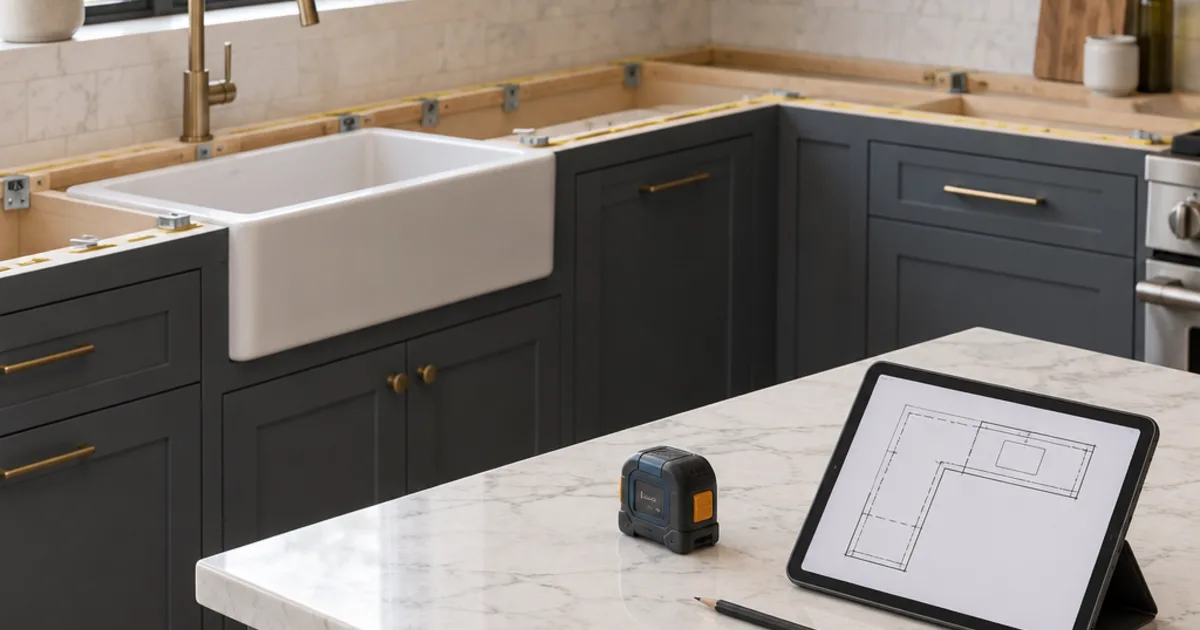
- Confirm the fabrication details. Ask about the edge profile, sink cutouts, overhang support for islands, and the sealing plan.
Common Mistakes to Avoid
- Trusting the label alone. Some stones sold as "quartzite" are actually marble or dolomite and will etch. Always do the acid test on an offcut.
- Assuming sealer stops etching. It doesn't. Sealer only slows staining.
- Using vinegar or all-purpose acidic cleaners. These etch marble and can wear down sealers on both stones.
- Approving from a sample chip. Veining on a full slab can look very different from a small sample.
- Ignoring island overhangs. Large unsupported overhangs need proper brackets or corbels with either stone.
Illustrative Example (Hypothetical)
This scenario is invented for explanation. It is not a real customer project.
A family that cooks daily wants a white, veined look for a kitchen remodel. They also want a matching primary bath. They tested an offcut of each candidate stone with lemon juice. One "white quartzite" etched, so they ruled it out. A second quartzite passed.
They chose that quartzite for the perimeter and island and paired it with white shaker cabinets. In the bath, they chose a honed marble vanity top, accepting that it would gently age. The result was a matched look, with each stone placed where its strengths matter.
Frequently Asked Questions
Is a honed or polished finish better for these stones?
Honed marble makes etch marks less visible, because the whole surface is already matte. Polished quartzite resists stains slightly better and shows off color and depth. Honed finishes in either stone can show oils and fingerprints more.
Can I repair etching or chips?
Light etching on marble can often be reduced with a marble polishing compound or professional refinishing. A fabricator is usually able to fill chips in either stone with color-matched epoxy. Edge chips are less likely with eased or rounded profiles.
Do I need a different undermount sink approach for each stone?
The mounting method is similar for both stones. Because quartzite can be brittle, the cutout corners should be fabricated carefully. Confirm the sink model before templating so the cutout matches exactly.
Will quartzite or marble affect resale?
Both are widely seen as premium natural materials in high-end kitchen and bath design. Condition matters more than the type of stone. A well-kept surface of either type presents better than a stained or heavily etched one.
Conclusion: Match the Stone to the Room
In the choice between quartzite and marble countertops, choose quartzite where you cook hard and want the marble look with less upkeep. Choose marble where use is lighter, or where you welcome a surface that ages visibly. Test real offcuts, see full slabs, and plan your stone together with your cabinetry and layout.
When you're ready to continue comparing options for your space, start with ucikitchenandbath to explore countertop and cabinet services. Then bring your room measurements and slab questions to a consultation.