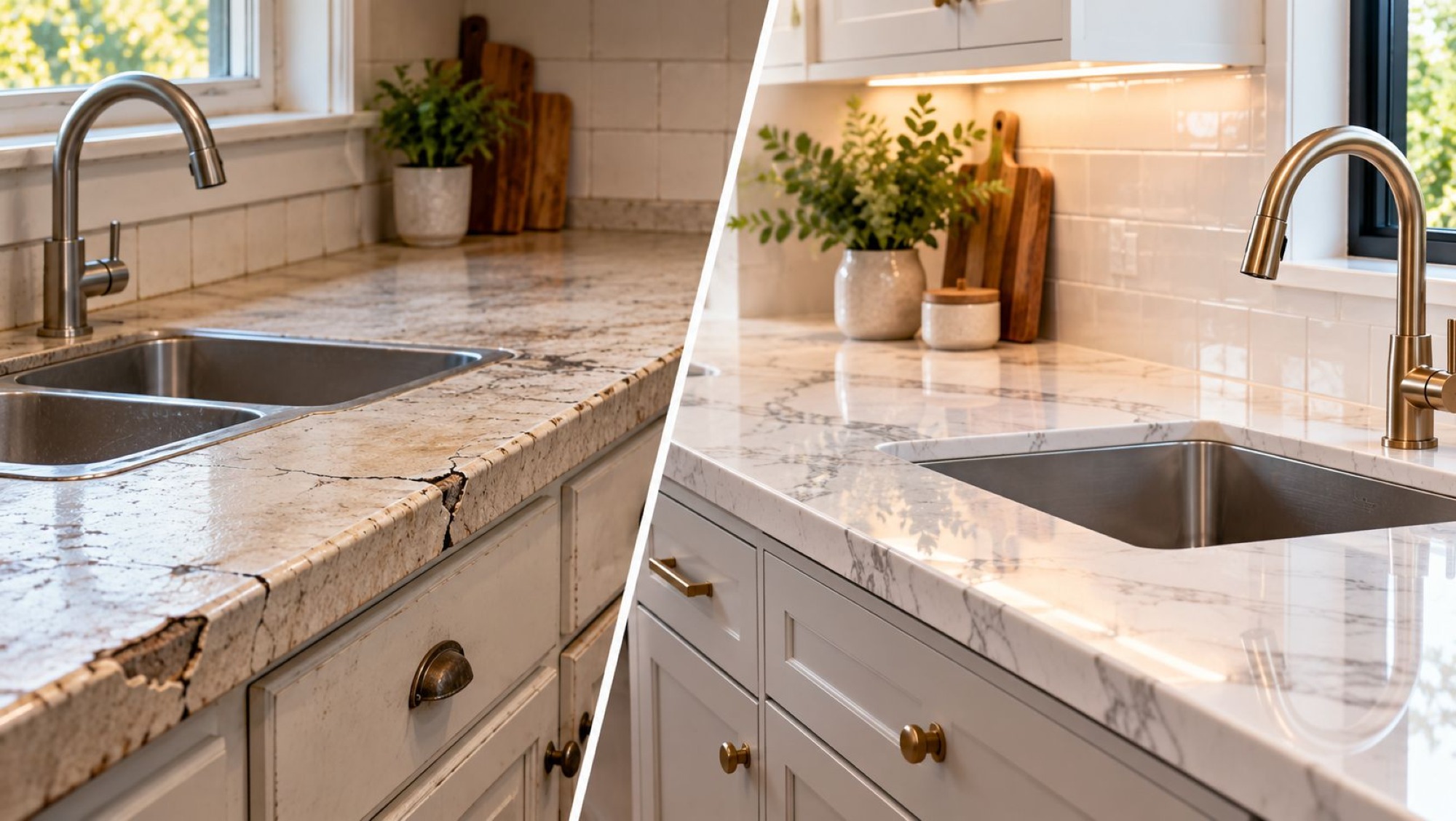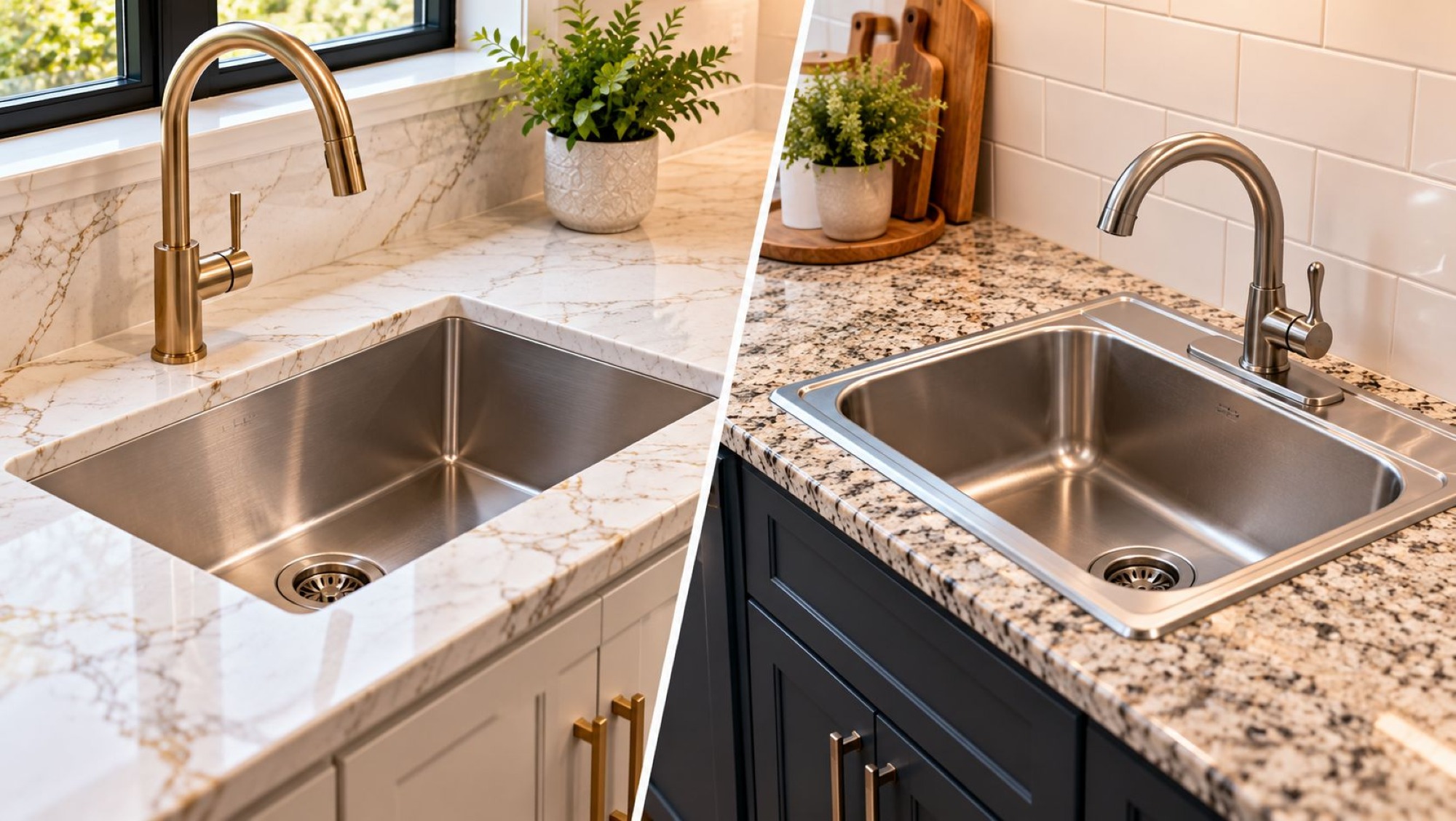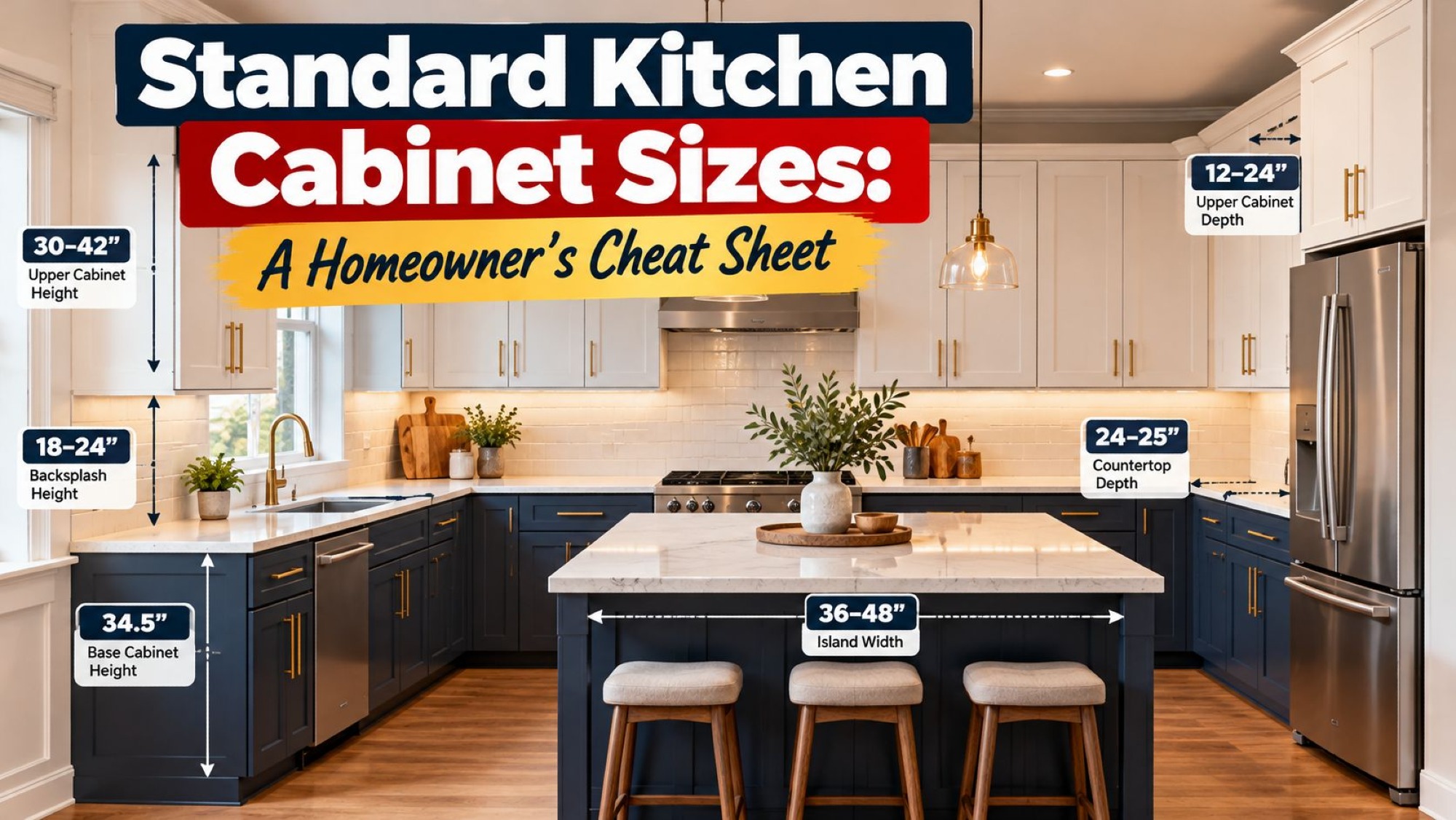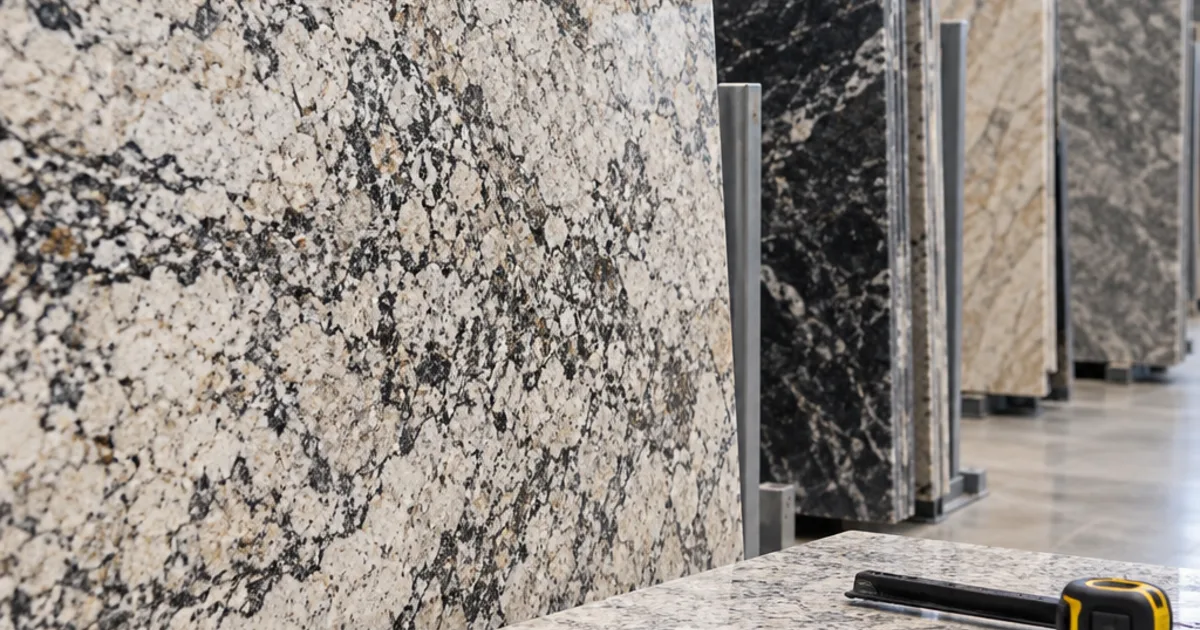
To choose the right granite slab, inspect the specific slab you'll receive rather than a small sample. Judge it in good light for color consistency, veining, natural fissures versus cracks, finish quality, and whether its dimensions cover your layout with minimal seams. Granite is quarried, so no two slabs are identical. A showroom chip can look very different from a full 9-to-10-foot slab. Going in prepared helps you avoid surprises at installation. If you're early in planning new countertops, the steps below show what to bring, what to look for, and which questions to ask before committing.
What to Bring to the Stone Yard
Stone yards can hold hundreds of slabs. Arriving with reference materials keeps you from choosing on impulse.
- Your kitchen measurements or layout drawing. Include countertop runs, island dimensions, overhangs, and backsplash height if the granite will go up the wall. Rough numbers still help you rule out slabs that are too small.
- Cabinet door or finish samples. Granite that looks warm under yard lighting can clash with your cabinets at home. Hold the sample directly against the slab.
- Flooring and backsplash samples. These help you see how busy the room will feel with every surface together.
- Photos of your kitchen in daylight. These remind you how much natural light the space gets.
- A phone camera and painter's tape. Photograph slabs you like and record their lot or bundle numbers. Many yards stock multiple slabs from the same block, and the numbers help you or your fabricator find the exact one later.
How to Inspect a Granite Slab, Step by Step
1. View the Full Slab, Not Just a Corner
Stand back several feet to see the overall pattern, then walk up close. Large-scale movement, such as sweeping veins or clusters of crystals, often appears in only part of the slab. Decide whether you love the slab as a whole or just one striking section.
2. Check the Lighting
Yard lighting is often fluorescent, or the slabs sit outdoors in bright sun. Neither matches a typical kitchen. If you can, ask to see the slab near a door or under different light. Dark granites can look nearly black indoors and reveal blue or green flecks in sunlight.
3. Distinguish Fissures From Cracks
Natural fissures are thin, line-like features where mineral crystals meet. They usually can't be felt with a fingernail and are generally considered part of the stone's character. Cracks are actual breaks. You may feel an edge, see light through them, or notice they run through the slab's backing. Run your fingertip and fingernail across any line you see. If you aren't sure which it is, ask the yard staff or your fabricator before you buy.
4. Look for Pits, Repairs, and Resin
Many granites have small natural pits, and slabs are commonly treated with resin at the factory to fill them. Look at the surface at a low angle under light. Heavy resin patches, cloudy areas, or filled spots in a prominent location may matter to you. Note them so they can be placed in less visible areas during layout.
5. Evaluate the Finish
Common finishes include polished, honed (matte), and leathered (textured). Polished granite shows color depth and tends to hide fingerprints less on dark stones. Honed shows wear and oils differently. Leathered adds texture and can disguise smudges. Touch the surface and check that the finish is even across the slab.
6. Confirm Thickness and Dimensions
Ask for the slab's exact length, width, and thickness. Thicker slabs, often around 3 cm, are typically used without a built-up edge. Thinner slabs may need edge lamination. Compare the usable area against your layout, leaving room for trimming any damaged edges.
7. Check Pattern Direction for Seams
If your kitchen needs more than one slab or a seam, notice which way the veining runs. Strongly directional stones need careful matching at seams. Uniform, speckled granites hide seams more easily. Ask whether consecutive slabs from the same block are available so the pattern can flow between pieces.
Decision Criteria and Tradeoffs
| Factor | Uniform/Speckled Granite | Dramatic/Veined Granite |
|---|---|---|
| Seam visibility | Easier to hide | Requires careful matching |
| Sample reliability | Small sample is fairly representative | Sample may be misleading |
| Design flexibility | Works with busy backsplashes | Usually pairs best with simple surroundings |
| Material waste | Layout is more flexible | Fabricator may orient pieces around features, which can use more stone |
Color is another tradeoff. Very dark polished granites can show dust, water spots, and fingerprints more readily. Mid-tone, multi-colored stones tend to disguise everyday crumbs and smudges. Very light granites may show stains more readily if they aren't sealed well. Ask whether the specific stone is typically sealed and how often.

Coordinating Granite With Your Cabinets
Your countertop and cabinetry are the two largest surfaces in most kitchens, so choose them together. A busy granite generally pairs well with clean, simple cabinet doors. For example, shaker style cabinets have a straightforward profile that lets patterned stone stand out without competing. If you're using stained wood, look at the undertones in the granite. Warm golds and browns echo wood stains. Cool grays and whites create contrast.
Illustrative Example: Narrowing Down Three Slabs
This is a hypothetical scenario for illustration, not a real customer result.
A homeowner with white cabinets and a 10-foot L-shaped counter plus a small island shortlists three slabs.
- Slab A: A dramatic white granite with bold gray veining. Under inspection, a heavily resined area runs through the center, and only one slab from that block is left. The island would require a seam with no matching slab.
- Slab B: A speckled gray granite. Two consecutive slabs are available, and there are no visible cracks. It's less dramatic.
- Slab C: A black granite with a polished finish. It's beautiful, but the homeowner's large windows would likely highlight smudges.
The homeowner photographs bundle numbers and holds a cabinet sample against each slab. They choose Slab B because it covers the full layout with good pattern continuity and suits their low-maintenance preference. The tradeoff is accepting a calmer look in exchange for fewer seam and supply concerns.
Common Mistakes to Avoid
- Choosing from a small sample alone. It rarely represents a full slab's movement.
- Ignoring how many slabs you need. Falling for a slab with no matching partner can create an awkward seam.
- Skipping the fabricator conversation. Your fabricator decides where seams, sink cutouts, and cooktop openings fall. Ask whether they can do a layout or template review on the actual slab.
- Not putting the slab on hold. Popular slabs can sell. Ask about the yard's hold policy and how long it lasts.
- Forgetting edge and backsplash plans. Full-height backsplashes and thick edge profiles use more material.
Frequently Asked Questions
Can I reserve a slab I like and decide later?
Many stone yards offer holds, but policies, durations, and any deposit requirements vary by yard. Ask directly before you leave. Record the slab's bundle or lot number so your fabricator can locate it.
Should I pick my granite before or after my cabinets?
Most homeowners choose cabinets first or at the same time, because there are fewer cabinet colors than granite patterns. Bring cabinet samples to the yard so you can compare in person. Choosing both together reduces the risk of clashing undertones.
Is it normal for the slab to look different after installation?
Some difference is common. Kitchen lighting, sealing, and the way the slab is cut and oriented all change the appearance. Viewing the full slab and discussing layout placement beforehand keeps surprises to a minimum.
Do I need to bring my installer or designer to the stone yard?
It isn't required, but it helps. Your fabricator or designer can judge whether a slab's size, flaws, and pattern suit your layout. If they can't attend, send them photos and dimensions before committing.
Next Step: Plan Your Countertop With Your Full Kitchen in Mind
The right granite slab is the one you've inspected in person. It should fit your layout with sensible seams, complement your cabinets, and match how much maintenance you're comfortable with. Bring measurements and samples, check every line and patch, and confirm dimensions and availability before placing a hold. If you're planning a kitchen or bath update and want to coordinate countertops and cabinetry in one project, visit ucikitchenandbath to explore options and start the conversation.