Cabinet Guide
Shaker vs. Slab Cabinets: Which Style Fits Your Kitchen?
Compare Shaker and slab cabinet doors by appearance, cleaning, hardware, room style and countertop pairing.
In this guide
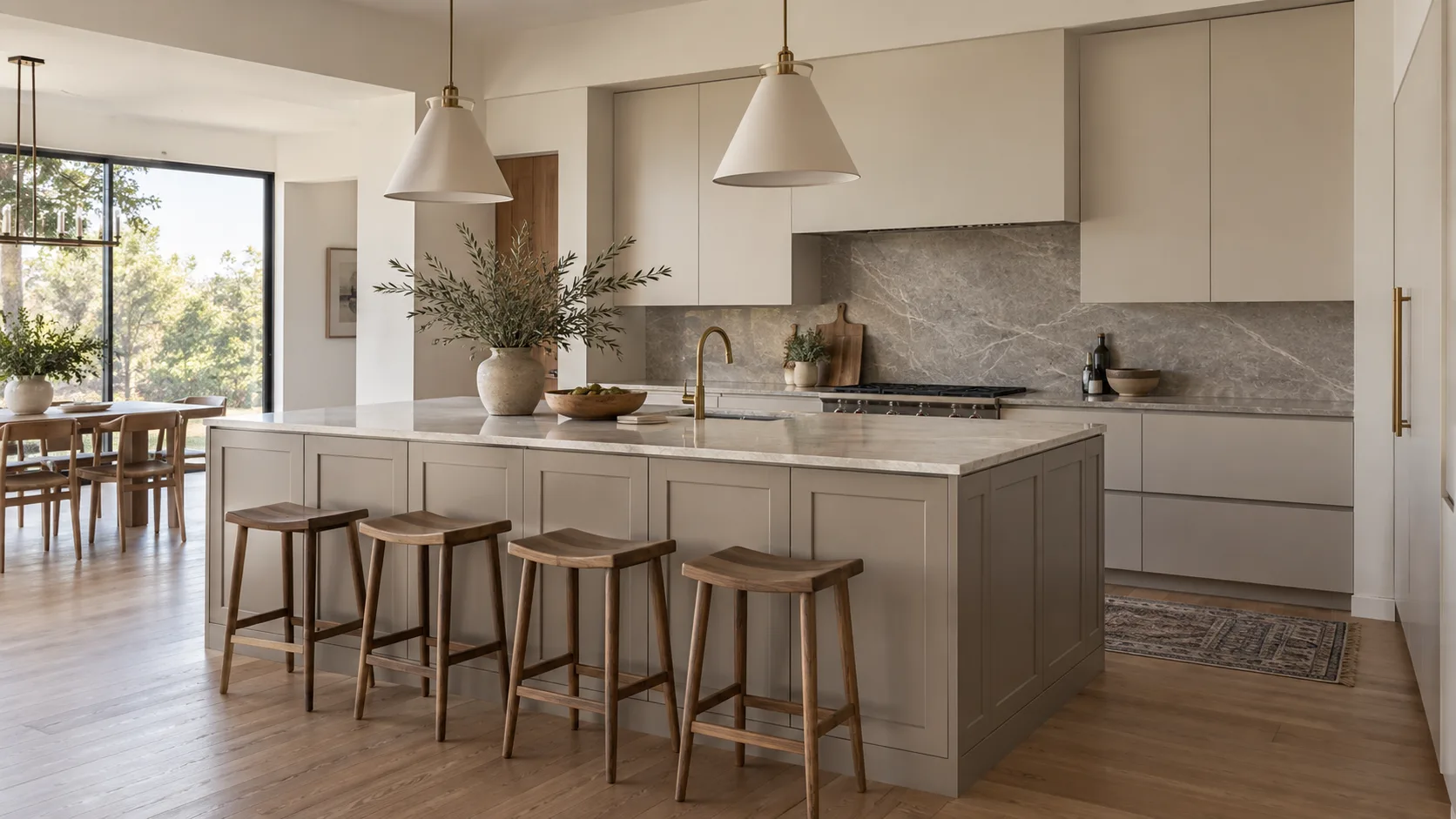
Shaker and slab doors create very different rhythms in a kitchen. Shaker adds framed detail and shadow; slab fronts create uninterrupted planes. Both can feel premium when proportions, finish and installation are handled well.
Shaker cabinet character
Shaker doors suit transitional, traditional and many contemporary rooms. The frame adds visual structure and can help a large wall of cabinetry feel less flat.
Slab cabinet simplicity
Slab fronts emphasize clean lines and material. Painted, wood-grain and textured finishes can each create a distinct contemporary look.
Cleaning and daily use
Slab doors have fewer edges to wipe. Shaker recesses may collect more dust, though good finishes remain straightforward to maintain.
Coordinate with the countertop
Bold stone movement often looks striking against simple slab fronts, while Shaker cabinetry can balance quieter quartz or traditional granite.
Frequently asked questions
Which cabinet style is more timeless?
Both can last visually when they suit the architecture; Shaker is more traditional, while slab is more minimal.
Are slab doors always less expensive?
No. Construction, substrate, finish and hardware matter more than the basic door silhouette.
Can Shaker and slab be mixed?
They can, but the combination needs a clear hierarchy and consistent finish details.
Ready to compare real materials? Browse our countertop collection, learn about measurement and installation, or request a consultation at our Norcross showroom.
Planning a countertop project?
See the materials in person.
Visit our Norcross showroom or request a consultation with the UCI Kitchen & Bath team.