Measurement
Countertop Measurement Explained: How We Create an Accurate Fit
Learn what a countertop technician measures, how to prepare your kitchen and why final templating protects the finished installation.
In this guide
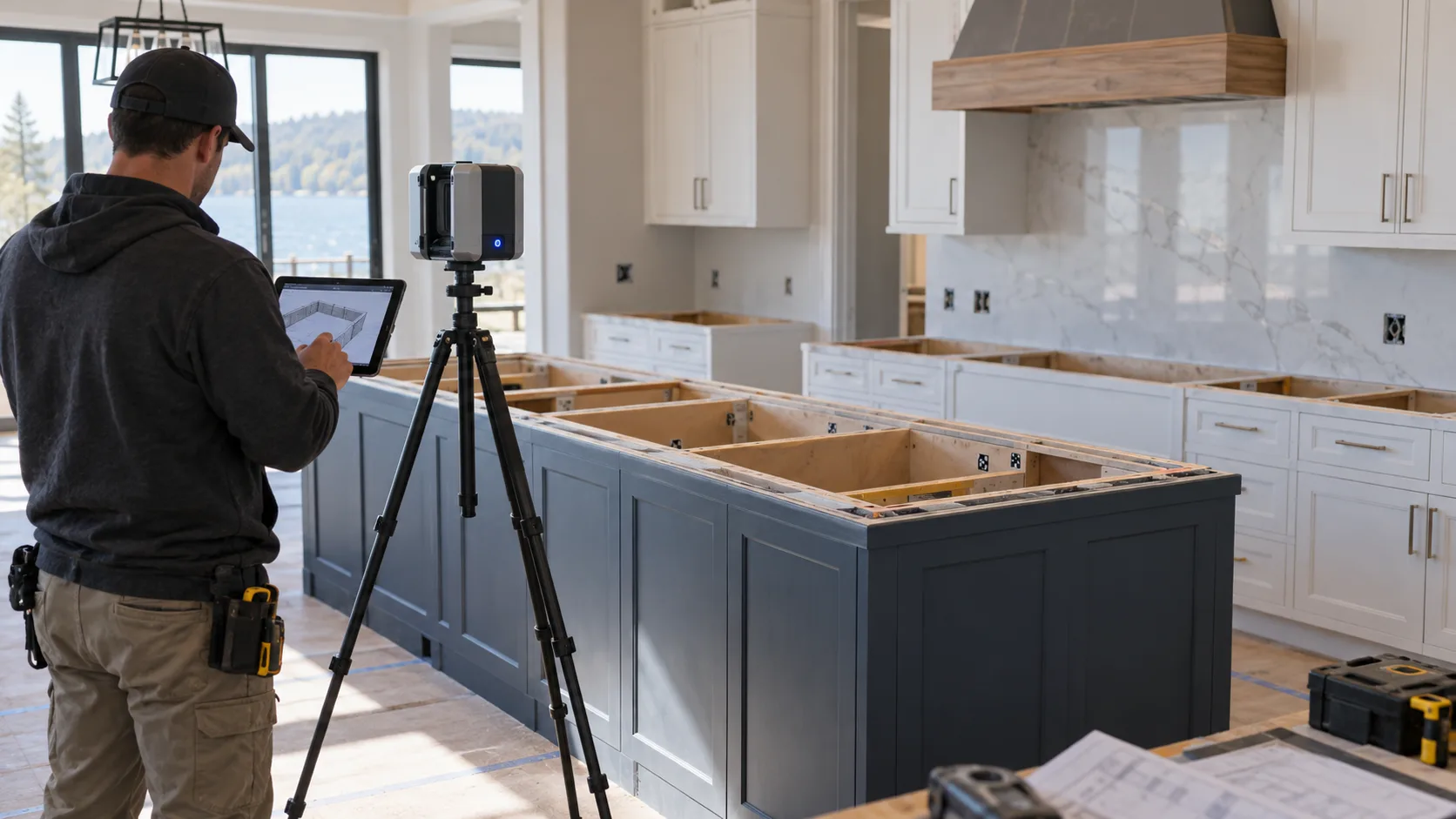
Professional countertop measurement translates an installed kitchen into precise fabrication information. It accounts for conditions that drawings cannot always capture, including walls that are not perfectly straight and cabinets that need adjustment.
What the technician documents
The technician records cabinet runs, corners, wall conditions, sink and cooktop openings, overhangs, finished ends, supports and likely seam locations.
How to prepare
Make sure cabinets are secured and level. Have sinks, faucets, cooktops and other relevant fixtures available, and confirm the final overhang and backsplash decisions.
Why cabinet level matters
Stone surfaces need continuous, appropriate support. A level base helps seams align, keeps overhangs consistent and reduces stress on the installed material.
Approve details before fabrication
Review edge profile, sink reveal, faucet holes, seam placement and backsplash height. Changes after cutting can be difficult or impossible.
Frequently asked questions
How long does measurement take?
It depends on the layout and number of surfaces, but access and completed decisions make the visit more efficient.
Should the old countertop be removed first?
Your fabricator will specify the preferred process based on the project and measurement method.
Can I change the sink after templating?
Changing the sink may change the cutout, so confirm with the fabricator before making any substitution.
Ready to compare real materials? Browse our countertop collection, learn about measurement and installation, or request a consultation at our Norcross showroom.
Planning a countertop project?
See the materials in person.
Visit our Norcross showroom or request a consultation with the UCI Kitchen & Bath team.