Marble
Marble Countertops: Beauty, Maintenance and Best Uses
Learn what makes marble beautiful, how etching and patina develop, and where this natural stone works best in a home.
In this guide
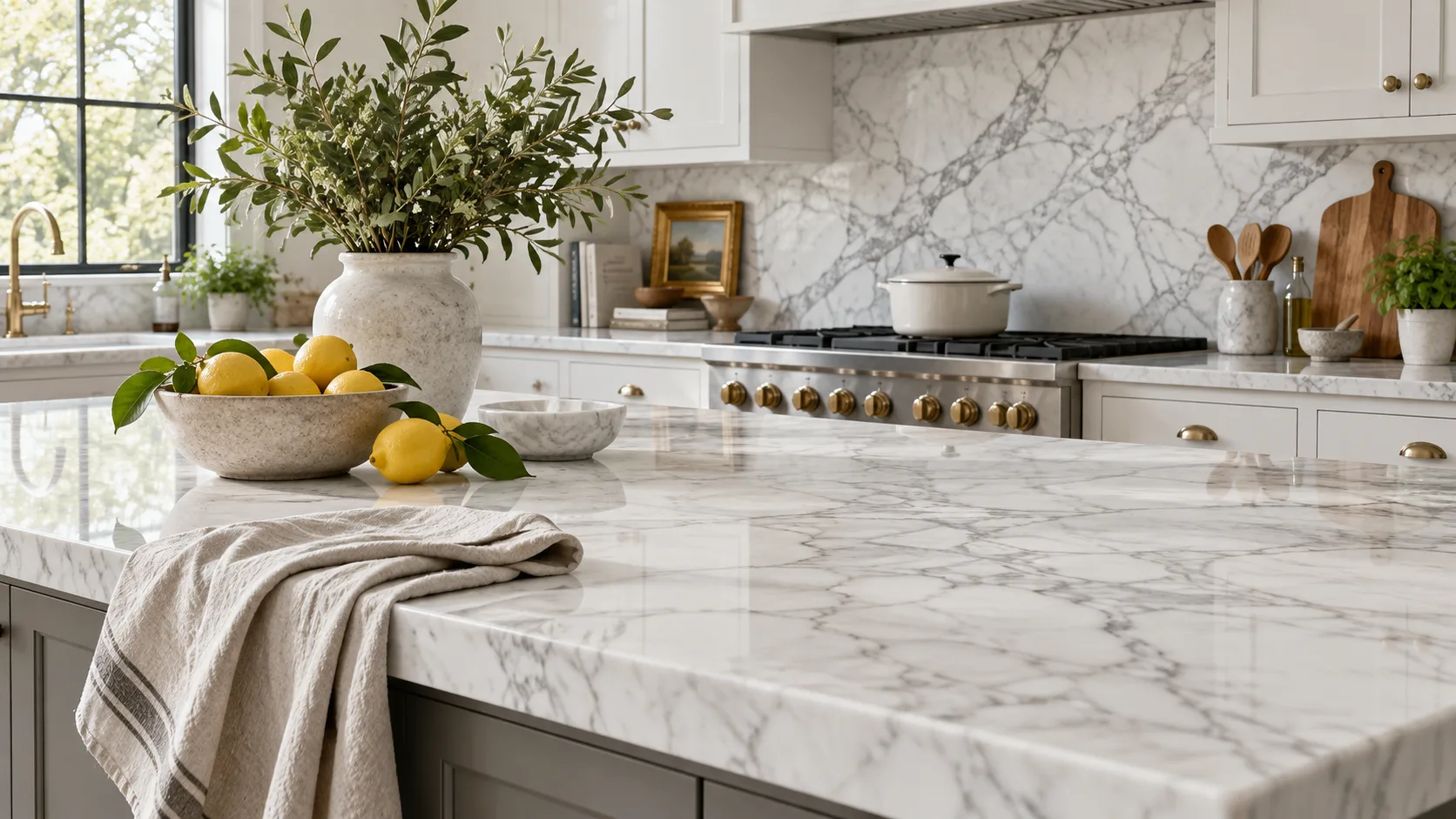
Marble has a luminous quality and natural veining that engineered patterns try to capture. It also develops a patina and can etch when exposed to acids, so it is best for homeowners who appreciate natural aging or are prepared for attentive care.
Know the difference between etching and staining
Etching is a change in sheen caused by acid contact. Staining is absorbed discoloration. Sealer can slow absorption but does not make marble resistant to acidic foods.
Select finish and color carefully
Honed finishes can make etching less visually obvious than a high polish. Light and heavily patterned marbles may also disguise everyday variation differently.
Build a realistic care routine
Use pH-neutral stone cleaner, wipe spills promptly, protect from hot cookware and use boards for preparation. Follow the stone professional’s sealing advice.
Where marble works beautifully
Marble can be compelling on a statement island, baking station, bathroom vanity or lower-use surface. Its suitability depends on expectations, not simply room type.
Frequently asked questions
Does marble always stain?
Not necessarily, but it is porous and benefits from prompt cleaning and appropriate sealing.
Can etching be prevented completely?
Care reduces risk, but acid-sensitive marble can still etch during normal kitchen use.
Is marble suitable for a busy kitchen?
It can be when the homeowner understands and accepts patina and maintenance.
Ready to compare real materials? Browse our countertop collection, learn about measurement and installation, or request a consultation at our Norcross showroom.
Planning a countertop project?
See the materials in person.
Visit our Norcross showroom or request a consultation with the UCI Kitchen & Bath team.