Granite
Granite Countertops in Atlanta: A Slab Selection Guide
Learn how to select granite by full-slab movement, color, finish, sealing needs and the practical details of professional installation.
In this guide
Granite remains a strong countertop choice for homeowners who want authentic natural stone and a surface with unmistakable character. Because no two slabs are identical, selecting granite is both a technical and visual process.
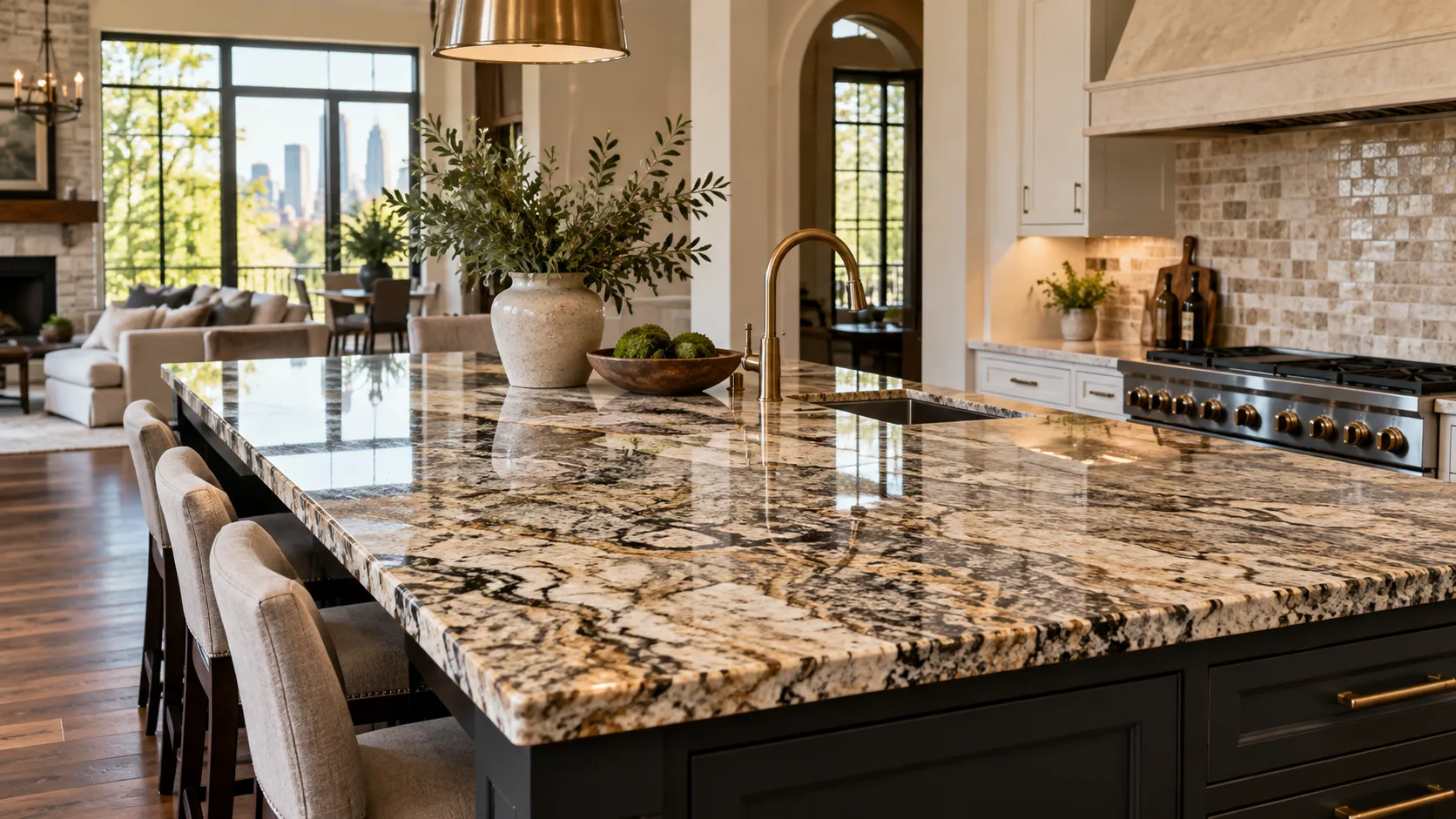
Read the entire slab
Step back to see overall movement, then inspect areas for mineral clusters, fissures and color changes. Decide which section should become the island or other focal point.
Coordinate undertones
Granite can contain warm, cool and neutral minerals in the same slab. Bring cabinet, flooring and paint samples so the dominant and secondary colors support the room.
Plan seams and edges
Large islands, turns and slab dimensions affect seam locations. Ask the fabricator to explain placement and how pattern direction will continue between pieces.
Care for natural granite
Use pH-neutral cleaners and wipe spills promptly. Some granite benefits from periodic sealing; follow the stone supplier and installer’s recommendation rather than assuming one schedule fits every slab.
Frequently asked questions
Is granite outdated?
No. Current granites range from quiet, subtle patterns to dramatic statement slabs and work in traditional or contemporary rooms.
Does every granite need sealing?
Sealing needs depend on the stone and finish. Ask your supplier to evaluate the selected material.
Can I choose the exact section used?
Many fabricators offer layout review for distinctive slabs, especially on islands and other focal areas.
Ready to compare real materials? Browse our countertop collection, learn about measurement and installation, or request a consultation at our Norcross showroom.
Planning a countertop project?
See the materials in person.
Visit our Norcross showroom or request a consultation with the UCI Kitchen & Bath team.