countertops
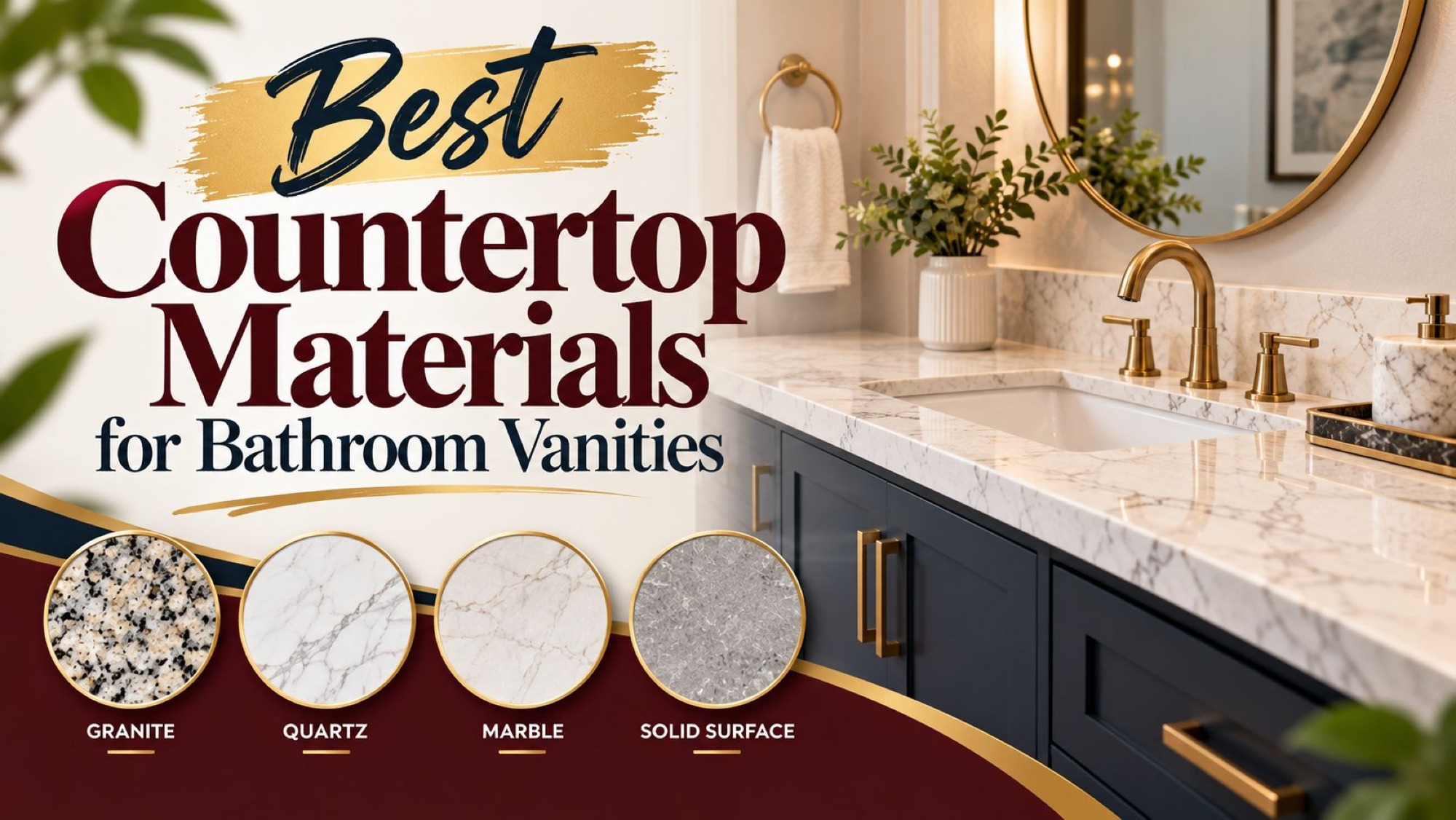
Best Countertop Materials for Bathroom Vanities
Compare quartz, granite, quartzite and marble for bathroom vanities and find the right fit for your humidity, budget and style. Visit our Norcross showroom.
In this guide
Choosing a countertop for a bathroom vanity isn't quite the same decision as choosing one for a kitchen. A vanity top deals with humidity, standing water around the sink, and daily contact with makeup, lotions, hair products, and cleaning chemicals, but it rarely sees the heat or heavy cutting a kitchen countertop handles. That shifts which material makes the most sense. Here's how the main options compare specifically for bathroom use.
Quartz: Low Maintenance in a High-Moisture Room
Quartz is an engineered material, so it's non-porous straight out of the fabrication shop. That matters in a bathroom, where a porous surface left unsealed can absorb moisture around the sink and, over time, support mold or mildew growth. Quartz also holds up well against the everyday cosmetic products that land on a vanity — foundation, hairspray, nail polish remover — without needing routine sealing. For a bathroom that gets heavy daily use, it's often the lowest-maintenance option. You can browse current quartz colors and patterns through our Countertops selection.
Granite: Durable, With a Little Upkeep
Granite is a natural stone, which means it's porous and needs to be sealed periodically to keep moisture and staining agents from working into the surface — typically every one to three years, depending on the specific stone. In exchange, you get a genuinely unique, one-of-a-kind pattern in every slab and excellent resistance to scratching and heat, which is more relevant if your vanity doubles as a spot for styling tools. Granite is a solid middle-ground choice for a primary bathroom that sees daily use but isn't in constant standing water. See our in-stock granite slabs for current colors.
Quartzite: Natural Beauty With Real Durability
Quartzite is one of the hardest natural stones available for countertops, with a marble-like look but significantly better scratch and etch resistance. Like granite, it's porous and benefits from periodic sealing, but its hardness makes it a strong option for a busy household bathroom where you want the character of natural stone without worrying as much about day-to-day wear. Explore our quartzite selection to see the range of movement and color available.
Marble: Elegant, With More Care Required
Marble is often chosen specifically for bathrooms because it sees less of the acidic exposure — citrus, wine, vinegar — that makes it a riskier choice in a kitchen. It still needs more frequent sealing than granite or quartzite, generally every six to twelve months, and it's more vulnerable to certain cosmetic products like hair dye or nail polish remover if they're not wiped up quickly. For a primary suite vanity or powder room where the goal is a soft, classic look and the surface won't take heavy daily abuse, marble remains a popular choice. Ask our team about current marble availability through our Countertops page.
Matching Your Countertop to How the Bathroom Gets Used
The right material often comes down to which bathroom you're outfitting. A kids' bathroom or a busy hall bath that sees daily wear and tear is usually better served by a low-maintenance, non-porous material like quartz. A primary suite vanity, used more carefully and less frequently, has more room for a natural stone like marble or quartzite where the trade-off is a bit more upkeep in exchange for a distinctive look. A powder room, with lighter overall use, is a good place to try a bolder natural-stone pattern you might avoid in a higher-traffic space.
Don't Forget the Cabinetry
Your vanity countertop and cabinetry work as a set, so it's worth choosing both together rather than picking a stone and hoping it matches whatever cabinet you already have. If you're updating the vanity cabinet at the same time, you can browse our full cabinet line, including finishes that work well in bathrooms, on our cabinets page.
See and Feel the Options in Person
Photos and swatches only tell you so much about how a material will actually look and perform in your bathroom's lighting. The best next step is to see full slabs in our Norcross showroom and talk through your specific bathroom — its lighting, its daily use, and your budget — with our team. Learn more about how our design and measurement process works, or go ahead and book a free design consultation.
Ready to Choose Your Vanity Countertop?
Book your free design consultation or schedule a free in-home measurement, and our team will help you weigh these materials against your specific bathroom. Visit our showroom at 6555 Jimmy Carter Blvd, Norcross, GA, or call (770) 441-1681 to get started.
Frequently Asked Questions
Do bathroom vanity countertops need to be sealed?
It depends on the material. Quartz is non-porous and never needs sealing. Granite and quartzite typically need sealing every one to three years, and marble needs it more often, roughly every six to twelve months.
What's the most durable material for a busy family bathroom?
Quartz and quartzite are generally the most forgiving choices for a high-traffic bathroom, since quartz needs no sealing and quartzite is one of the hardest natural stones available.
Can I use the same material on my kitchen countertops and bathroom vanities?
Yes, and many homeowners do this for a consistent look throughout the home. Our team can help you choose complementary or matching materials across rooms during a design consultation.
Planning a countertop project?
See the materials in person.
Visit our Norcross showroom or request a consultation with the UCI Kitchen & Bath team.